
Beijing: New cross-border infrastructure connecting North Korea with China and Russia is reshaping regional connectivity, creating potential economic opportunities while raising questions about security tensions and geopolitical rivalries in Northeast Asia.
According to a regional analysis by Hao Nan, Russia and North Korea opened their first road bridge across the Tumen River in September 2026. Five weeks later, China and North Korea inaugurated the New Yalu River Bridge, connecting Dandong in China's Liaoning province with Sinuiju in North Korea, following more than a decade of delays.
The developments indicate Pyongyang's efforts to strengthen physical connectivity with its two principal strategic partners while maintaining strict domestic political control.
North Korean leader Kim Jong Un is reportedly pursuing improved access to trade, essential supplies and infrastructure without compromising the country's nuclear deterrence strategy.
For Russia, stronger transport links offer additional logistical opportunities amid expanding security cooperation with North Korea, particularly following Pyongyang's reported military assistance during the Ukraine conflict.
China, meanwhile, views improved connectivity as an opportunity to maintain stability along its northeastern frontier, strengthen regional influence and support economic development in its border provinces.
The region already possesses significant trade infrastructure. Hunchun, located in China's Jilin province, provides access to Russia's Zarubino port and North Korea's Rajin, creating potential maritime connections for inland Chinese industries.
Official Chinese figures indicate that cargo volumes passing through Hunchun's border crossings reached approximately 3.38 million tonnes in 2025.
Existing railway connections through Suifenhe in Heilongjiang province also facilitate substantial freight movement between China and Russia.
However, longstanding political mistrust, international sanctions and regional security disputes continue to complicate broader economic integration.
As China prepares to host the November APEC summit in Shenzhen, these infrastructure developments highlight the competing possibilities of deeper regional cooperation and intensified geopolitical divisions.
New Bridges Strengthen North Korea’s Links With China and Russia Amid Regional Security Tensions
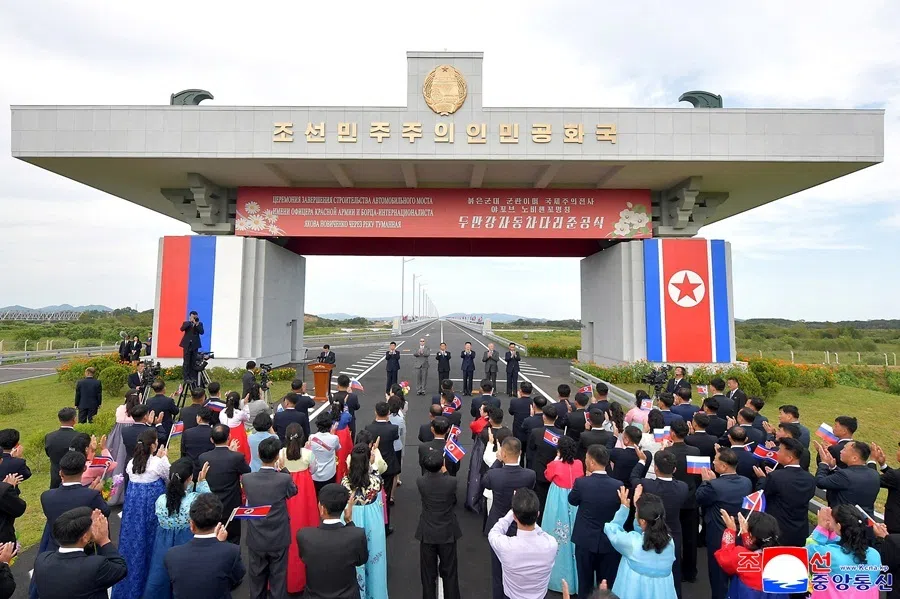
Source - Reuters


No comments yet. Be the first to comment.