
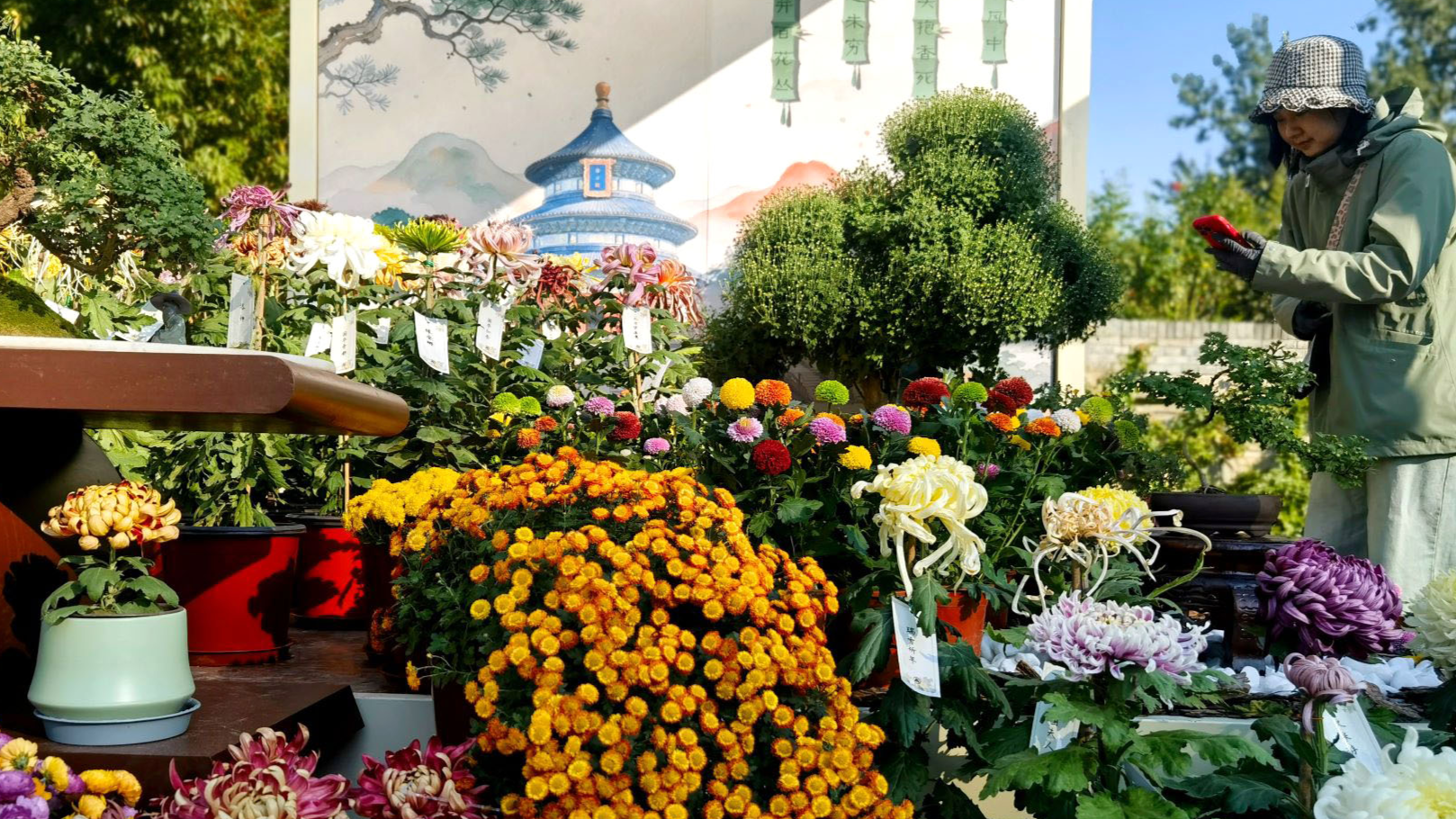
As autumn transforms Beijing, chrysanthemums are capturing the attention of residents and flower enthusiasts, celebrating a centuries-old Chinese tradition that blends natural beauty, poetry and cultural heritage.
Among the passionate growers is 66-year-old Hao Hong, whose towering chrysanthemum has become a source of pride this season. Four years ago, she and her husband began attending chrysanthemum cultivation classes as a hobby. Their interest gradually developed into a rewarding pursuit involving months of careful gardening, friendships with fellow enthusiasts and the excitement of showcasing their flowers.
Chrysanthemums hold a special place in Chinese culture, symbolising resilience, integrity and peaceful living. More than 1,600 years ago, renowned poet Tao Yuanming immortalised the flower in verses describing a tranquil life surrounded by nature. Since then, chrysanthemums have been celebrated as one of the traditional "Four Gentlemen" of Chinese art, alongside plum blossoms, orchids and bamboo.
Today, chrysanthemums share the distinction of being Beijing's official city flower with the Chinese rose, reflecting their enduring cultural significance.
At Beihai Park, a historic imperial garden in central Beijing, horticulturist Liu Ning has spent 21 years cultivating these remarkable flowers. For her, their appeal extends beyond vibrant colours and delicate shapes to the artistic imagination and poetic associations they inspire.
One particularly admired variety, Taiye Chihe, features soft pink petals resembling lotus flowers. Named after Beihai's Taiye Lake, it evokes the image of a lotus emerging gracefully from the water. Liu especially appreciates the tiny golden-yellow curls decorating its petals, comparing them to delicate brushstrokes in traditional Chinese paintings.
As Beijing welcomes autumn, chrysanthemums continue to connect generations through gardening, artistic expression and an appreciation of nature, preserving a treasured element of China's cultural identity.
Beijing falls for chrysanthemums in autumn
Source - Reuters


No comments yet. Be the first to comment.